Wednesday, September 28, 2011

Geezer Tribute - Wilson Greatbatch

Wilson Greatbatch 1919-2011
     Toady marks the passing of a great person and extraordinary inventor Wilson Greatbatch at age 92..  In my book he deserves recognition as one who lived a magnificent geezerhood.   He continued to be an active inventor throughout his entire life with over 350 patents.   But perhaps more important than his specific inventive successes was his zest for life.   His curiosity and generosity of spirit made him a most delightful person to encounter.    I was fortunate during my years at Cornell to enjoy some time in his presence in personal conversation as well as listening to him lecture on his development of the heart pacemaker and associated long life batteries.  At that time he had also become interested in developing a cure for AIDS and was putting his inventive and innovative genius to work in exploring new ways to deal with this disease.  Although he was world re known at the time I met him, he was unusually humble and genuine in his demeanor.   There was not a pretentious bone in his body.    I am saddened by his death but at the same time rejoice in his contributions to humankind and his example of appreciating the gifts God had bestowed on him.    I would hope that all of us in geezerhood would be as kind and generous as Wilson Greatbatch.  
       Condolences to the Greatbatch family as they both celebrate and mourn the passing of a father, grandfather and great-grandfather who lived an exemplary life for all of us.

Monday, September 19, 2011

Life as Story

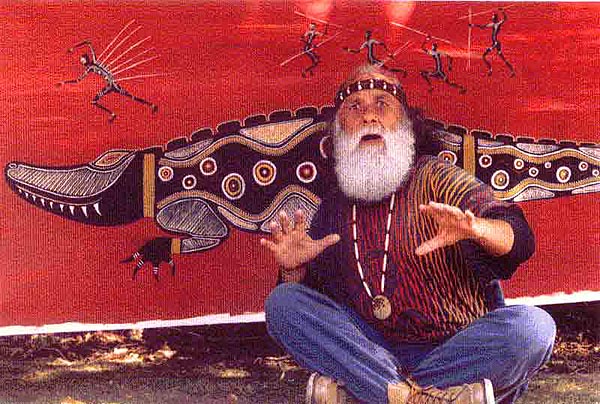
An Aboriginal Storyteller
      Sunday night we were treated to an evening with Garrison Keillor at the State Theater in Ithaca, New York.   Keillor is a master story teller whose Lake Wobegon tales and Minnesota based commentary entertain and inform all of us.   Many of the tales he told on Sunday evening I had heard before.   However, they were just as entertaining and humorous as the first time I heard them.    There are recurring themes in his stories.   In his new presentations he often weaves the themes into his monologue in new ways.   It is intriguing to try to separate fact from fiction.   Even though it is mostly fiction, he paints such vivid pictures of the events that it all seems very real.   Sunday evening he said,  "Fiction enables one to live a variety of lives".     What a wonderful concept that one can enter into any number of life fantasies through fictional characters and events.   In aboriginal cultures, the stories of the people are handed down through the storytellers.    And those stories get told again and again.   Certainly Keillor has mastered the technique of passing on a fictional lore through repetitions and embellishments in much the same way of the aboriginal storytellers.
      Keillor is on the way to geezerhood.    I believe he is either 70 or close to that age.   He clearly is aging well and continues to be highly productive.   A new book is about to be finished, he continues to do solo touring on his schedule and the radio show A Prairie Home Companion remains highly popular.   When asked on Sunday night whether and when he plans to retire his reply was convoluted.   Clearly he recognizes his mortality but since he so much enjoys what he is doing he will continue his writing and performing for an indefinite time.     He claims to truly enjoy being in the company of young people and why not since he has a thirteen year old daughter.    So best wishes Garrison for continue success in your life story.    And maybe you will find peace with geezerhood in the future.

Tuesday, September 6, 2011

Geezer Oak Trees

North Tower Road Oaks

   When I arrived at Cornell University in 1953 to continue my undergraduate studies I walked up Tower Road almost daily to attend classes in buildings on the upper campus.   Each side of Tower Road was lined with relatively young oak trees perhaps six to eight inches in diameter.    Over the last 58 years since I have observed their growth into magnificent giant oaks.   A few days ago during a walk up Tower Road I became acutely aware of how these oak trees had survived the onslaught of weather, road salt and other abuses of their environment.    These trees have become geezer oaks in a wide range of health and condition.    And some have not survived at all.  
    Perhaps these oaks are metaphorically like men moving through geezerhood.   The oaks on the north side of Tower Road are sturdy, large and quite healthy.   They are planted in good soil and are  well pruned and still producing many acorns for the squirrels.   The oaks on the south side of Tower Road have not fared so well.   Auto parking under these trees on the south side has compacted the soil and contaminated it with road salt.   These trees have stunted growth and often poor leaf and acorn production.
South Tower Road Oaks
     Humans moving through geezerhood also exhibit differences in their quality of survival as a function of of the quality of their past and present environment.    Geezers of the magnificent oak variety have had the good fortune of the environment of loving and supportive relationships, healthy habits and satisfying careers.   Unfortunately some geezers have suffered both self inflicted bad choices and random misfortunes that have produced limited growth and abilities.   The tattered oaks are their symbols.    Just like the oaks on either side of Tower Road, we geezers are all survivors even if we might show differing appearance due to the ravages of time and life difficulties.

Sunday, August 14, 2011

Geezer Holiday at Empire Farm Days

     This past Wednesday I attended the the Empire Farm Days near Seneca Falls, New York.   This is a yearly event that I have enjoyed many times.   I can't remember the first time I attended this event that has a 78 year history.    Since it has been going on before I was born I expect the first time I visited the show was when I was a youth and was with my Dad.   At that time the show was basically an activity of the Empire State Potato Growers Club.   One of the demonstrations during the early days was of an aircraft spraying a field.    I was enthralled by airplanes at the time and marveled at the bravery of the fliers who would swoop to potato top level to lay down their spray.  They would even end up with some potato tops hanging from their landing gear.
     From those early days the show has grown into a gigantic exposition of farm machinery,  structures, tools and peripheral rural businesses from banking to insurance to seed and fertilizer among many others.   It is truly a big three day affair for New York agriculturalists.
     I arrived about 10 AM and was parked within a few hundred yards of the exposition within a few minutes.   Although they had circulating transport to the grounds, I was close enough to walk to the first street.   My routine has been to methodically travel all of the streets visiting the displays that especially attract my attention.    Mostly I am attracted to farm machinery on display and enjoy sitting on the seat of the super sized tractors, combines and forage choppers.     However, I also enjoy conversations with the sales representatives to get their take on the state of agriculture in New York State.    I always visit the Cornell building staffed by personnel of the College of Agriculture and Life Sciences to see what kind of pitches and information are being extended to the public.
Salford Plow -Up to 14 Bottoms

Three Bottom Mounted Plow
     By noon I had managed to visit about one half of the displays and arrived at one of the food tents to have lunch and sit for a brief rest before finishing my journey through the exposition.   Many different items piqued my interest but since I have been tracing the history of the plow and the evolution of plow design I was especially interested in the plows on display.


      Plow design continues to evolve even after 5000 years of development.   The two pictures illustrate two different moldboard designs.   The upper one shows a shortened moldboard with an abrupt curvature at the tail end and the lower picture shows a much longer moldboard with a more gradual curvature.   The top one would cause more breakup of the soil.   Although minimum tillage has dominated soybean and corn culture lately, I learned that some farmers have returned to periodic plowing to plow down crop residues and pesticide/herbicide residues.
     By 2:00 PM I had completed by visits to all the displays of interest to me and I was ready to depart.    I concluded from my visit that New York agriculture is a thriving.    Modern technology has enhanced the efficiency and productivity of agriculture.    However,  economic, social, health and safety problems continue to challenge farmers and the rural population.  Farming is still a hard and demanding life and all of us who benefit  from an inexpensive, abundant and high quality food supply should be grateful to our farmers.  Dwight Eisenhower made the following observation.

      "Farming looks mighty easy when your plow is a pencil and you're a thousand miles from the corn field".   Dwight D. Eisenhower, September 11, 1956


Tuesday, August 2, 2011

Zoo Memories

     Geezers have lived long enough to accumulate a lot of memories.   So it is for me.   Among these memories are recollections of visits to zoos.   A number of those memories came up today since we did a "day cation" visit to the Rosamond Gifford Zoo in Syracuse.   We enjoyed several leisure hours observing a wide array of animals and exhibits in simulated habitats from ocean to desert to mountains to plains and forests.   Both domestic and wild animals were on display.   And along with the animals was a plethora of the human species also roaming outside the cages.   It is a wonderful zoo practically in our backyard and amazingly we had not been there in about 20 years.   Our recollection was that we had brought our  now 25 year old daughter there about 20 years ago.
      My first zoo experience was in 1952 when my high school senior class took a trip to the Washington, D.C.    Part or our Washington experience was a visit to the Rock Creek Zoo.   I do not have any particular vivid memories except that it seemed like an enormous venue.   Later in life I had heard how fabulous the London Zoo was and on a professional  trip in 1974 I had a chance to tour the London Zoo and thought it was one of the greatest zoos in the world.   In 1983 Nancy and I took a delayed honeymoon to London and I was determined that she should experience the London Zoo as well.   We took the underground from our hotel to the zoo and spent an interesting day there.   However, when we got ready to return we needed to walk the entire length of Regents Park to get to the underground station.   By that time Nancy was limping but grimly soldiering on.   To my dismay when we reached our hotel she removed here sneaker to display a bloody blisters on both feet.   Needless to say I was devastated by my inconsiderate behavior.   Rightly so, she reminds me of that day every time we visit a zoo.
     Our day today at the zoo was appropriately long enough to satisfy our curiosities but short enough to avoid pain and suffering.  We will need to go back in less than 20 years.    And maybe we ought to try going to the Bronx Zoo some time when we are in the New York Metropolitan area and take along our now mature daughter and her husband.
    Here are pictures of some of the zoo denizens I particularly appreciated.
Nancy The Penguin

Spiral Horned Sheep - Native to Afghanistan

Every Zoo Must Have Elephants

Hot Day for the Penguins
   

Saturday, July 23, 2011

The Bounty of Agriculture

    This summer my wife and I have been taking day vacations in New York State.   Our routes to places of interest are mostly through rural upstate New York counties.  Many of the counties have outstanding farming operations and others are more wild and scenic.   However, each day vacation has exposed us to the bounty of agriculture right next door to where we live.   Soybean, corn, alfalfa, wheat, oat, and barley fields demonstrate the great bounty of the earth and the dedication of thousands of farmers.   We also have observed the growth of the fruit of the vine and trees on these journeys.    These vistas are a reminder that humankind is critically dependent on the productivity of the land for our survival.
Corn Tasseling

Soybeans Within a Mile of Our  Home
    In developed countries like our United States of America, so few people are needed for food production that most of our population have little sense of what it takes to provide our market basket of food.    We are indeed blessed with abundance of low cost food.   In the hierarchy of human needs, food is an essential need along with clothing and shelter.   However, without food, neither clothing nor shelter have the same essential demand on our resources.   Because we have abundant food, clothing and shelter we are able to engage in other activities that enhance the quality of life.    With these essentials in hand we are able to direct our attention to both visual and musical arts as well as sports and other entertaining activities.   In my humble analysis, our cultural richness is only enabled by the bounty of agriculture.   Thank God for the tillers of the earth!

Tuesday, July 5, 2011

Geezer Memories

      There is the saying, "Birds of a feather flock together."   I think this applies to to generations too.  Likely that geezers of a generation gather together.    Perhaps the reason for this assemblage is the shared memories of that generation.   When I go to Cornell to work on my emeritus related projects my routine includes a morning coffee break and a noon lunch with geezer faculty.   We naturally have much in common with long careers in academia followed by retirements that include continuing intellectual activities.   Some of my colleagues have moved to emeritus status via phased retirement.   This permits a transition from full time to half time for five years and then full retirement.  Those of us in our 70's have a shared history at  Cornell so we have lot of common memories.   As we enjoy the socialization of coffee and lunch we can test the authenticity of our memories and ponder whether the university is advancing or declining.   Whatever the case we do have interesting discussions and frequently diverse interpretations of past events and their impact on the present.
     Sometimes our discussions are not so ivory tower.   Today, those of us who grew up on farms were reminiscing about pitching manure.   The lead in to this mundane recall came from one colleague's earlier research on the impact of animal agriculture on phosphorous run off into our streams and its influence on water quality.   Last night I had a dream about pitching manure out of the barnyard of my home farm when I was a boy in upstate New York.   A colleague who grew up in the state of Washington on the other side of our nation related a similar experience of pitching manure by hand.   An interesting common thread of our mutual existence.    What a leap of existence it has been for many of my current social circle of Cornell geezers to go from farm to academia.    Five of the seven colleagues that I interacted with today are first generation off the farm people.
Pitching Manure by Hand From the Stable
     Although we have a lot of shared memories, we are also futurists as well.   One colleague is an expert in sustainable agriculture and a National Academy of Engineering member.   Another colleague is also a National Academy member and an international expert in water movement in soil.   And another member of our coffee cabal often consults in India in irrigation for rice production to feed the world.   What a blessing it is to have both memories and excitement about the future of technology and society.